Showing posts with label epigenetics. Show all posts

Sunday, April 10, 2016

One Life Mystery That Is Destroying Darwinism But Points To The Creator

Exponential Life - Epigenetics Deepens the Mystery of Design

I was blown away when the scientist said it; my mind yelled, "What? That's crazy!" His topic was the famous, or maybe infamous, tiny friend living down in our lower digestive tract, Escherichia coli (E. coli) bacteria. He said that, on average, any given strain of E. coli shares about twenty percent of its core genes with any other E. coli -bacterial strain. In other words, about twenty percent of the E. coli genes are shared by all strains, but around eighty percent can very throughout the species!*

One possible explanation for this phenomenon is that other information-carrying structures besides deoxyribonucleic acid (DNA) may partly define the E. coli's final shape. This was startling news to me, for throughout my early biology education, I had understood DNA to be something like destiny.*

Thursday, November 20, 2014

The Amazing Cell!

A couple of years ago, I came across a presentation given at one of the TED conferences by a Drew Berry. If I would have a guess, many non-biologists would be really bored with a talk on cell division, right? But no, not this one, it was most interesting, using computer animation, he exposed the cell division process in great detail - and made it breath taking for everyone!

You see, attached to sister chromosomes is something called the "kinetochore" which contains around 200 types of proteins but thousands in all. This little structure acts as an anchoring site for microtubules, part of the cell scaffolding. Microtubules help pull the two daughter chromosomes apart.

But the interesting part is this, the kenetochores are sending out little chemical and motor signals to indicate when the cell will divide! In fact, Drew called the kenetochore a "signal broadcasting system."

The implications of this structure alone are astounding. Along with many other types of epigenetic information within the cell, these attachment sites hold one of the most illustrious keys to the mysterious dividing cell. One can see a designer's creative abilities at play with structures like this. It's mind boggling that such an elegant structure, such as this, doesn't kindle more awe responses from people towards an amazing creator!

I would encourage you to take a look at it for yourself!


Image credit: Flicker/Mehmet Pinarci

Friday, November 14, 2014

What Is The Difference Between Shannon Information and Specified Complex Information? And why it's important.

Information is interesting, here I want to specifically discuss Shannon Information verses Specified Complex Information. I know, you may be saying "so what, it sounds boring to me." Maybe so, it may even zip over your head, in that case duck so it will hit the person behind you! While being of an esoteric philosophical nature, I think it's significant because of its implications.

The Difference Between Shannon Information and Specified Complex Information
The Difference Between Shannon Information and 
Specified Complex Information
There's a view that information in DNA and biological systems contain just Shannon Information - this is not true. Yes, biological systems do contains Shannon Information, but it is more specific than that - it contains Specified Complex Information. Let me first define the two and then tell you why biological systems have Specified Complex Information and why this discussion is so important.

Shannon Information verses Specified Complex Information

Shannon Information is only concerned with the improbability or complexity of character strings. In other words, it's just mere complexity or it has information-carrying capacity. Specified Complex Information on the other hand, is complex, but also has patterning significance. This is functional information that carries meaning

Let me put it this way, all Specified Complex Information is Shannon Information, but not all Shannon Information is Specified Complex Information (see bottom half of the meme). For example, Shannon Information just means that a string of characters are complex and improbable in their arrangement, but it does not define if this string carries significant meaning. Again, Specified Complex Information is specified and always carries meaning.

For example, this is Shannon Information:
“dfsad sdaf oije .zvsdlkfjas sdlfj” and also can be “Learning about information is fun!” 
However, Specified Complex Information always carries meaning: 
Learning about information is fun!”
“dfsad sdaf oije .zvsdlkfjas sdlfj” is not specified functional information - at least as far as I know, it holds no meaning to an English speaker!

In case you did not get that, let me put it this way. Consider a key and lock. You can take a key blank and file down any pattern on the key blade - that is Shannon Information. However, if you want the key to fit the lock, you have to cut the key blade to specified sequences, shapes and depths for proper key-lock fit. Now that is Specified Complex Information.

Biological Systems and Text on the Page

Now both the text you are reading and DNA are improbable and complex. However, both carry meaning. The text you are reading is telling you something in English. DNA contains information that transcribes to RNA that gets translated to protein. In fact those sequences must be in a specific order else the organism will not produce the correct protein, a protein that does not function well or maybe none at all! The organism's enzymes must be able to transcribe it, if there is no correct sequence, there is no transcription.

Why Know the Difference?

Oh, by the way, just so you know why this distinction is so important, Specified Complex Information is only generated from a mind. In fact, that is the only source we know of that produces this type of information! Think of the text you are reading now, it has come from my mind. Thus this leads to the conclusion that life's specified informational core is grounded in intelligence - an intelligent mind!


Have you heard materialists say the "DNA is just Shannon Information" so it can arise by chance? What do you think, have you gained a new level of respect for "Information theory?"

Friday, February 28, 2014

Double Function: DNA Code and Duons

Cells are the "building block of life", they form organisms. Inside, DNA resides, storing the instructions that tell how to build proteins. Protein are made up of something called called amino acids. The instructions in the DNA are called genes. However, the DNA has other functions as well, it regulates some of the cell's activities.

DNA code seems to have multiple layers of information, from molecular tags. Much of the information outside of the DNA is called the epigenome.

While genes and epigenomes are interesting, there is evidence that DNA itself, the four letters that make up the DNA (A, T, C, and G), contain at least two layers of information. One that directs the sequence of the amino acids to make protein. The other helps regulate where types of molecular machines can copy the code to make RNA, an intermediate between DNA and protein. This is a regulatory function. These instructions are found many places on the DNA code. However, some of it is found coded right with the genes, in the same sequences that code for protein!

The sequence of the DNA is "nonrandom". This means that these genes are highly specified. They need to be, they are carrying at least two layers of information on some genes. The writers of the below study state the following: "The information architecture of the received genetic code is optimized for superimposition of additional information." This causes a simultaneous encoding of amino acids and regulatory information within exons, the parts of the gene that code for protein.

We only see information come from a mind. In this case, we have two layers of information, in the same "text". Think of reading a book. Now what if you turned the book and read it in another direction, ore even backwards. While doing this, the author has written more information that is with in the same text that you were just reading. You have a very compact book with couple layers of information. Just one layer of information points to a creator. However, given that we find at least two layers of information makes it even more stunning. Two layers makes it even more stunning and exponentially points to a mindful origin.


Stergachis, A. B. et al. 2013. Exonic Transcription Factor Binding Directs Codon Choice and Affects Protein Evolution. Science. 342 (6164): 1367-1372.

Saturday, February 22, 2014

Things I Have Learned From Dr. Steven Meyer

Throughout the years I have listened and have learned from Dr. Steven Meyer. I agree with most concepts he presents, but do take exception to others. However, this post is not about this arguments, rather his methods and tactics in presenting and talking to those who oppose his views. I am impressed by how he handles himself in conflicting situations. Because of this, I have tired to isolate attributes that I can learn from.

There are three main categories: his personal attributes, his conflict handling persona, and how he argues his case.

Personal Character

He comes across as intellectual but illustrative, making the complex simple. His dress and demeanor does not draw attention away from his arguments. I remember him and his arguments, not some sort of jazz, fancy or sloppy clothing. While intellectual, he is still modest and minimizes himself in debate. He ignores it when people don't call him "Doctor" or when others minimize his credentials.

Handling Conflict

When I see him in conflict, he handles himself well. I think part of this comes for confidence and knowledge of the subject material. However, he is open to critique and is fair minded. He admits mistakes and he is willing to learn from his antagonist. He critiques the arguments rather than his antagonist. Lastly, he is quick witted and he is open to dialog with anyone.

Arguing His Case

I like how he argues his case. He makes modest claims which have much evidence. He uses what I would call "minimalist argumentation method," he focuses on things that provide the best arguments and gives the greatest evidence supporting those arguments. In other words, he uses only few topics but gives powerful arguments for them. This gives him less "turf" to defend. This allows him to stay focused and reduce sidetracking. Other issues are often baited in front of him, he does not budge, he stays focused and argues for his modest claims.


Friday, December 13, 2013

Elegant Design In A Cell

In freshman year biology, students learn the amazing complexities of the cell. For example, we have been told for years of the cells amazing four letter alphabet or the genome. Of course we know that information always comes from a mind, at least that is our everyday experience (books we read, conversations we have). Just this level of biologically understanding should point one to a creator. However, this is truly just the tip of the iceberg.

Other Information

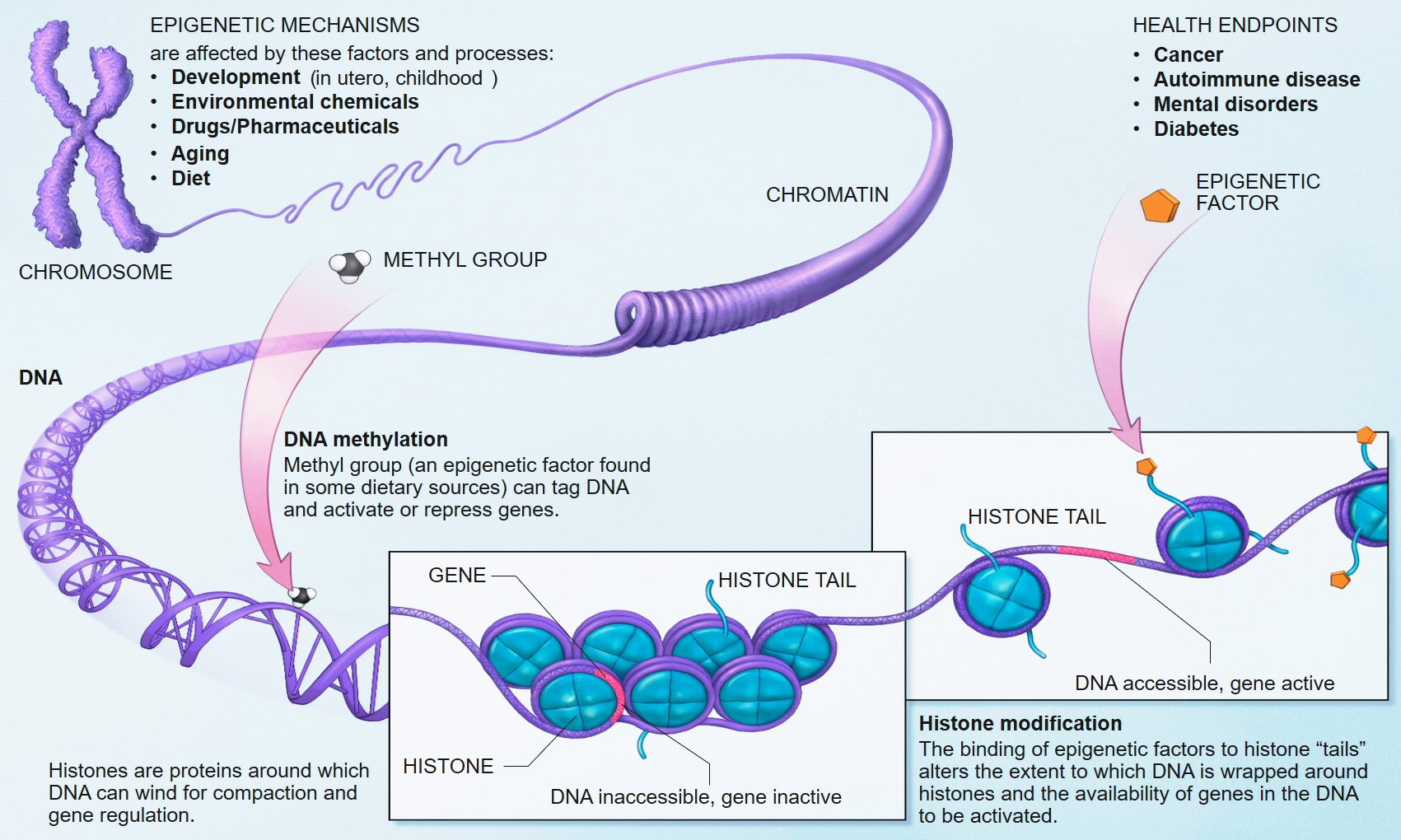
Epigenetic mechanisms: Click image for full illustration.
What most don't realize is that the DNA is not the only information carrier in the cell. RNA, a close cousin of DNA and copied from DNA, also caries information. But wait, that is not all, there are little, and not so little, tags on the genes that tell the cell to do certain things. These tags included methyl and acetyl groups among other tags.

Epigenetics

In fact, these tags are just the small part of a
n emerging field called epigenetics, layers of information above the DNA. Even the cell structure is now being recognized to hold information. Part of the internal cell scaffolding is now thought to contain parts of this information. More we learn about this information, the more complex just one cell gets. Material does not create information randomly or systematically. Information needs a mind for causation. This translates into what many of us knew already, designs like this need a designer.


Image source: "Epigenetic mechanisms" by National Institutes of Health

Join others & receive
my free blog posts &
resources. Get it now.