Showing posts with label biomimicry. Show all posts

Saturday, May 7, 2016

5 Amazing "Alien Technologies" in Life That Strike Down Darwinistic Evolution

Terrestrial Alien technology

Digging in the deep jungle tangle, you are in search for lost ancient civilizations. Finding primitive technology is your expected end because of the surrounding primitive cultures.

Your slow sleepy digging suddenly is awakened by the earth's yawning mouth, you are plunged down into the bowels of the earth. A hidden cavern awaits your arrival. Heart pounding, you crawl over the mess, and then you stumble into a maze of artifacts.

Thursday, July 9, 2015

A Very Obvious Reason Biology Points To God! (Which You May Not Have Thought About)

Once I met a German engineer working to reinvent the vacuum cleaner. When I say reinvent, I mean that! A totally different design. If he and his team were successful, they would do well. If not, he would be knocking on doors for a new job.


Hard, Hard Work!

Engineers, designers and artists understand how hard it is to design. It is time intensive and there is great need for attention for highly specified patterns. Perfection is the goal, mistake free. As an artist draws the human face and or body, with realism, its a hard strenuous process. Those that do it well have spent years practicing. In fact, very few artists can draw a human well. There are patterns to be memorized, specifications to be accounted for and proper proportions are a must. Then there is perspective and foreshortening. This is just the copy of the human design, and it's hard, it's not the original creative design! Humanoid robots have another level of design, the amount of work is immense!

Designing is an emotional process, whether success or failure, praise or criticism. When one criticizes a design or if it fails, it is depressing. When successful, creativity is rewording and exhilarating. Designers and engineers are very sensitive to their creativity and hard work. The process of designing can be enjoyable as well.

Tuesday, May 26, 2015

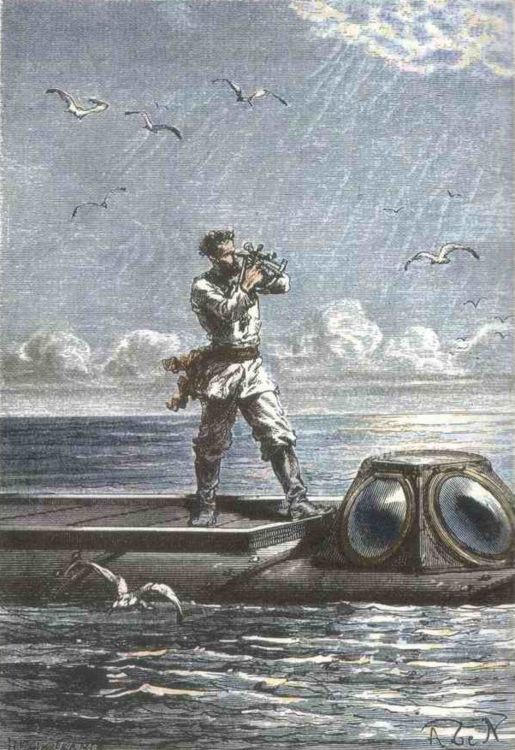
Captain Nemo And His Sub Expose This One Silly Belief.


Twenty Thousand Leagues Under The Sea

Verne's fictitious whaler characters chased Captain Nemo's stupendous submarine all over the ocean. Wild imaginations of a gigantic whale haunted them. You see, captain Nemo's design for his vessel, Nautilus, was somewhat based upon marine creature's hydrodynamic shapes.

Ideological Framework

The single most pervading intellectual ideology of our time (and maybe ever) is the materialistic, neo-Darwinian framework. Many feel that "nature designs" new biological structures. Functional? Complex? Specific? Meaningful?

What? a mindless process designing?

Minds vs. Material

Interestingly, from our experience, we never see natural process pregnant with engineering abilities. We never have. If this concept weren't couched in such technological language, plus holding such high esteem within academia, it would sound foolish.

In fact, the only design originator from our experience is a mind. Why would we ascribe the mindful enterprise to inanimate objects? Do non-animate objects have the capabilities of designing, imagining or communicating?

The same definition of nothing is the same as what rocks think about. Other inanimate objects think about the same thing.

Fall On Your Face And Worship That Stone!

When we look back at ancient cultures and the "uncivilized," we are humored by idol worship, how silly of those people to think wood and stove carvings are life's creators. Modernity strangely struggles with a similar scenario, with the more technical phrase “nature designs.”

https://feedburner.google.com/fb/a/mailverify?uri=IbiteThis strikes me as facetious. 

It takes multitudes of highly trained, intelligent minds to design a machine functioning like the fictional Nautilus. Hours of mindful fabrication and manufacturing are poured into the creation of submarines. Some are breath-taken, thinking that they're learning from nature's exquisite self-design, when in reality they're looking at seemly endless designs created by the Ultimate Mind.

If you enjoyed this topic and others like it, you can get the latest posts sent straight to your in-box! Please click here to be one of the first to receive the latest articles. You don't want to miss out! (Click here.) 


What biological designs interest you? Bioinspiration is a term to describe when we use these biological designs for new technology. How could you put them to work for yourself? Do you think that natural process have the ability to create complex, meaningful design? Why and how?


Image source: Wikipedia

Friday, April 10, 2015

Biomimicry's Amazing Potential For New Designs in Technology

It was 1948, George was out walking his dog through the Swiss Alpines, when he was attacked by nature's nemeses, the cocklebur. As he plucked these annoying structures off his clothes, inspiration flashed across his mind, inspiration from the common, annoying bur.

Along with his friend, he created what he called “locking tape”, but that name never stuck. We known it as … Velcro.

https://feedburner.google.com/fb/a/mailverify?uri=Ibite Biomaterials

You see, biology hides amazing structures, materials and chemicals. They are energy efficient designs, biodegradable materials and chemicals that heal and protect. In addition, biomaterials are manufactured at body temperature! Compare that to our manufacturing practices - high temperature.

Biomimicry

These master designed biomaterials are stupendous. We, as intellectual humans, have spent millennia engineering. We have been perfecting the manufacturing art and amassing our knowledge of technology and materials. However, nature's structures and systems are superior to ours. There abides brilliant designs, fine tuned “technology”, systems that outperform ours. In the quest to solve real world problems, organisms harbor superior information infused systems. In fact, some engineers make it their business to mimic these super designs. We call this biomimicry.

Termites and Temperature control

Consider, if you would, our temperature controlled buildings. Our houses, office spaces and industrial complexes use lots of energy. Is there a design in nature that is somewhat more efficient than ours?

Travel with me to south Africa, and check out the termite mounds that stud the region. Some of these reach the height of 10 feet. These structures are impressive, they have intrinsic temperature controlled systems. These termites “farm” a fungus for food which grow best at exactly 87 degrees Fahrenheit. But listen to this, the ambient temperature ranges from 35 to 104 degrees Fahrenheit! A circulatory system of cooling vents are opened and closed for temperature control. Plus these networks keep the mounds at perfect moisture and oxygen levels.

Can we learn something from these? Designers, using the principles of termite mound ventilation, designed an 18-story shopping complex. Mechanical air conditioning and heating are absent, yet this building remains comfortable. Using its ventilation network, breezes pull fresh air through the building. This building is uses just 10 percent of a traditional building's energy usage.

Conclusion

So can we solve some of our energy, design and pollution problems using biological solutions? Yes. Some of these structures are stronger and lighter than ours. All are biodegradable. All manufactured at mild temperatures. All are environmental friendly. This is an exciting time to be in science and technology!

One can see the mind behind these structures. The designs are beautiful. The uses are abundant. The applications are exciting. The keener we are to these master designs, the better a steward we will be with the gift of nature. The more we talk, think and use biomimicry, the more aware we can be to apply them to novel areas.

If you enjoyed this topic and others like it, you can get the latest posts sent straight to your in-box! Please click here to be one of the first to receive the latest articles. You don't want to miss out! (Click here.)


What other uses of biology can you think of that has helped technology? Do think these structures help point to a designer? 


Image source: Filcker/Joe Ross

Wednesday, September 3, 2014

Gears

Covering the design company IDEO's product design process, the host of the documentary called “IDEO Deep Dive” said something to the effect of “everything besides nature was designed.”

The Gear

Consider the lowly gear – classically an iconic element to indicate human technological progress and design. We all have seen them - mundane right? Actually no. Gears aren't interesting because of their boring shape, but rather because of the design criteria needed for proper function. Nor are they arbitrary or haphazardly designed and fabricated. Teeth and gear spacing, proper alignment and material type, and optimal size and shape are all essential.

As ancient as almost any other human technology and as human of a design as they come, I think we would be stunned if nature contained a beautiful geared system. One is technology, the other is biology. Gears are very mechanical and systematic, seemingly very different than the organic nature of life.  I want to changeable this notion.

The Nymph

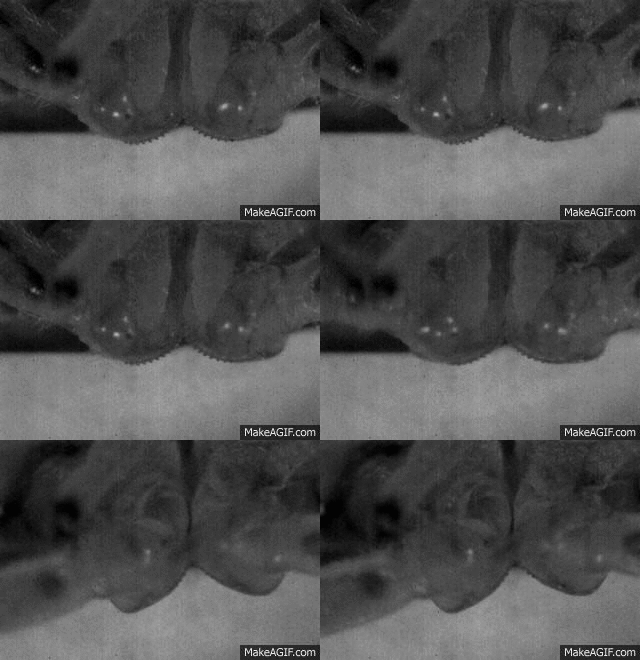
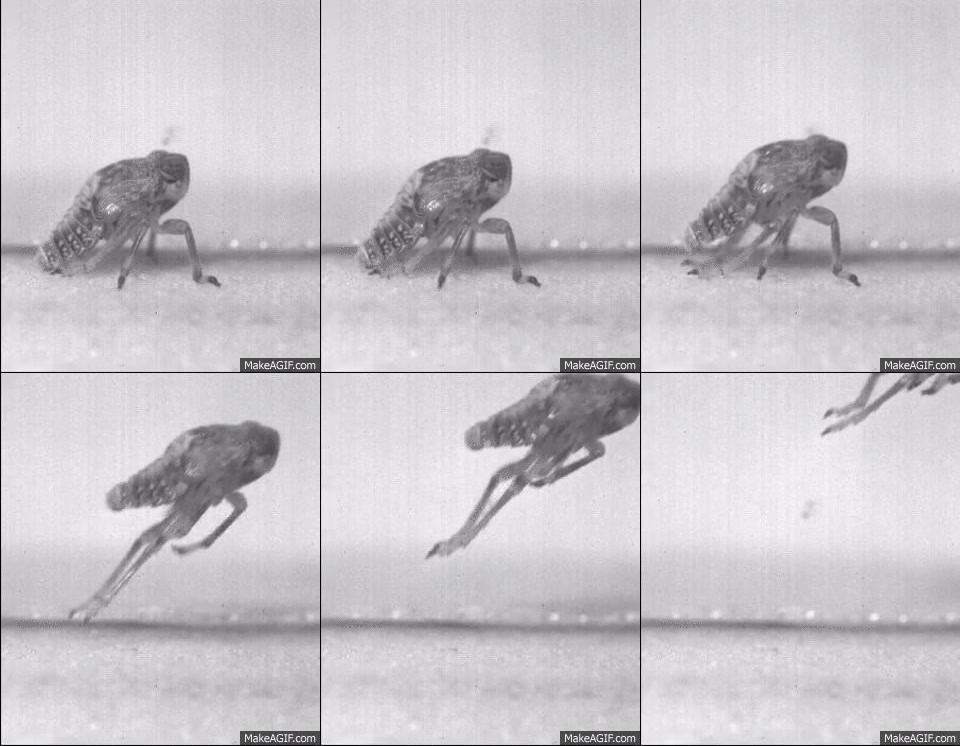
An unremarkable English insect took the biological world by surprise some time ago, the Issus nymph (1). Interlocking gears studs the trocantera this insects hind-legs (above image hosted by gizmag.com).

Synchronizing the jumping legs, these gears coordinate the action of simultaneous movement in both legs (first image below, hosted by makeagif.com). The design is essential for this little creature so its jump is synchronized. Moving at high rates of speed through the air, the insect would spiral out of control without this arrangement (second image below from makeagif.com).


Best Explanation 

As you study these beautiful images, reconsider what the host of that documentary expressed. Now tell me, what's your gut reaction, do these gears look designed or do the demonstrate mindless origins? I'm not asking what you think, but rather your first reaction? If you are like most, you have to agree, they appear designed.

A method that many use to answer historical science questions is to observe the present to understand the past events. While not every historical event may be deduced this way, many concepts can be elucidated. Every new design from our experience has been agent designed. I can' think of an exception. So why wouldn't we expect agent causation in the design in nature? Isn't the most reasonable explanation for the design in nature a mind?

It seems that biology has an habit of surprising us, why? We are stunned with the design we find in nature. Many times technology and biology overlap in design. We infer design in technology, is it not logical to infer design in biology as well? The design in nature seems to jive well well with our presuppositions of design, not chance and random like process. Intuitively we can detect design.
In addition, designs in nature seem to be optimally designed for the function intended. In fact, the designs are so good that we, in our quest for technology, copy biological designs in a field of study called biomimicry. We look in awe at biological artifacts and let them inspire us for tools we make. Technology, while amazing, is clumsily and klutzy in comparison to biology. Brilliant minds spend hours, days and years on designs that are far inferior to what we find in nature.

Elegance At Its Best

Again, let me ask you, from your intuition and from experience, can't you infer design? Your gut reaction is awe at the beauty of the gear design, you don't automatically infer randomness in mechanical like structures like this, do you? The only source of new design, from our experience, is intelligence. In fact, we can even learn from optimal designs in nature, including this gear. We are able to copy these structures, even though they are more elegant than our own mindful designs. From our intelligently designed technology, we come short. Biology has very advanced designs, while it seems illogical to infer origins from mindless process, it's not only natural but also logical to infer design on biological structures - even this gear.


(1) Burrows and Sutton. "Interacting Gears Synchronize Propulsive Leg Movements in a Jumping Insect" http://www.sciencemag.org

Tuesday, July 8, 2014

Mr. Kingfisher

Problem: Train needs to travel at 200 mph with very little noise-pollution.
Solution: The Shinkansen Bullet Train and a bird-watching engineer.

Excessive noise is generated when trains zip too fast, exiting tunnels. Thus a sonic boom. As it moves through a tunnel, pressure builds up in waves which causes this boom as it emerges. A bird-watching Japanese engineer, on the train design team, put his bird watching skills to work. Capturing the design from the kingfisher's head and beak, he designed the nose of the train.

Kingfishers dart into the water searching for fish - absent a splash and scarcely a ripple. Propelling through a low drag medium to an high drag medium causes shock. Circumventing this issue is accomplished by the exquisitely design of the beak. Now you see the solution for the train with a similar issue - low drag in the tunnel, high drag as it emerged. The wedge design of the kingfisher's beak was the needed key.

But get this, sound was not the only thing that was reduced, but also a fifteen percent less energy usage and an increase in travel speed by ten percent (1)!


(1) http://www.asknature.org/product/6273d963ef015b98f641fc2b67992a5e

Image source: Flicker Karen Roe


Thursday, May 15, 2014

Life's New Language

Artistic DNA molecule. Flicker/Keith Ramsey
For one who follows the world of biological news, one but can't help but have seen the news flash of "alien DNA" being incorporated into bacteria. It seems that many are praising the scientists as if it were some great and humanitarian leap for our progeny. However, is the hype accurate?

Yes, it is quite interesting that a group of scientists, Floyd Romesberg and team from Scripps Research Institute, were able to manufacture chemicals that were quite different from DNA's four bases: adenine, thymine, cytosine and guanine (A, T, C and G respectively). To be frank it think the research is quite interesting. 
The bases engineered by Romesberg’s team are more alien, bearing little chemical resemblance to the four natural ones (1).
These new alien DNA bases, d5SICS and dNaM, were integrated into the microbes genome - this is the core of all the hubbub. Enzyme machines that help copy and translate the genetic code were able to interact with these novel bases.

Some are saying that we may be able to manufacture new drugs and unprecedented cures come from this research. In other words, with new letters one will be able to make new genetic words, which will expand the potential protein results.

My Perspective

However, I do have ten observations concerning this study, some on the skeptical side:
  1. Great, they accomplished adding new, man-made bases to a bacteria's DNA. But at this time the cell has no way of making more, if the microbe's human farmers discontinue supplying the cells with these bases, these bases will no longer be coded within the cell. Traditional bases will replace these artificial bases places.
  2. These bases are said to add information potential of the genome. This may be good, however, even with our computer systems, with only two "alphabets" (0 and 1), we are able to make images, videos, text, music, manufacture complex 3D objects and you name it. DNA already has twice as many "alphabets" as our technology, four bases (not counting the 64 codon combinations and used to put together 20 amino acids).
  3. OK, we have two new bases, so what about the RNA and all the protein complexes that help make protein? Yes, we can copy the text, but what about protein manufacturing? It is one think to copy text, but it is another to use text to build an aircraft. There is a whole level of magnitude above this accomplishment needed to even think about making protein.
  4. Proteins are made up of amino acids. The are attached to something called tRNA and are used to help build protein. So one is going to have to build "machines" help specify new amino acids to the correct new bases that make up the tRNA. Where will these machines come from? How will they be coded? What molecular machines will be automated to make them? There is a vicious loop going on here.
  5. To make protein, we need amino acids. Even if we get amino acids to "stick" to the novel tRNA and rRNA, we have to get the amino acids to form protein.
  6. We finely make a new protein. But form equals function. In other words, a protein needs to be folded just right for very specific jobs. Little machines, called chaperons, help fold proteins in the correct and usable shapes. Where are these new chaperons coming from for the new proteins with new types of amino acids? In other words, new code and new machines will have to be designed to fold the new proteins into correct orientations to even be potentially usable.
  7. They credit the origins of our current nucleotide bases to evolution through deep time. No intelligent source is invoked. However, it took a group of intellectual researchers over fifteen years to just get these microbes to uptake and replicate these artificial letters. This does not count the many other researchers, since the 1960's, who also have been attempting to work toward this goal. It took intelligence to get as far as they did, how could a blind, undirected process come up with four bases? It is even worse than that, think about it, as of now, the microbes can't even uses these bases for anything. They just sit there and get replicated. This hole system is irreducible complex, unless all the parts were in place in the first cells, the original bases would not have functioned.
  8. Along with this, we only know of information arising through intelligent minds. It is the inferences to the best explanation and the law of uniformity. Pure naturalism is not enough. As said on the point above, this study demonstrates this argument lucidly.
  9. Lead researcher Romesberg said the following within a piece in Nature: "If you read a book that was written with four letters, you’re not going to be able to tell many interesting stories" that is why these new bases are important, they will extend the informational content (1). Again, sounds good except for when one looks at even a simple cell, one is totally amazed by the stunning design and complexity. It makes our greatest accomplishments seem like foolish children's play. The biological story is one of the most interesting "stories" that can be told!
  10. Lastly, a quote from Romesberg states the following: "This shows that other solutions to storing information are possible and, of course, takes us closer to an expanded-DNA biology that will have many exciting applications—from new medicines to new kinds of nanotechnology" (2). Why does it seem as if all cutting edge (maybe on the offbeat side) "research" is argued  to help with health, medicine or improve technology? It seems to me that they trying to validate their research by saying "hey, this sounds a little silly, but it really does have importance." OK, maybe I am cynical, but that's what it sounds like!


(1) Callaway, Ewen. "First life with 'alien' DNA" http://www.nature.com/news/first-life-with-alien-dna-1.15179
(2) Scripps Research Institute Scientists Create First Living Organism that Transmits Added Letters in DNA 'Alphabet'. http://www.scripps.edu/news/press/2014/20140507romesberg.html

Thursday, March 13, 2014

Molecular Robots

Molecular robots. What are they? How do they work? Are they ethical? A piece written by Heather Zeiger, a bioethicists, gives all the lowdown on how they work and the ethics behind them.

While she goes into detail on how they work (read her article for more in depth explanation), I just want to give the big picture. Overall, these that she talks about, are not these little machines that run about the body on wheels or legs or any thing like that. They are little tags that cause a chain reaction of events that tell the body to do something, such as destroy a diseased cell. In other words, they are molecules, designed by scientists, that are to be injected into someone. They are able to tag diseased cells, such as cancer cells, and these cells are then destroyed.

However, she does have a couple of concerns. Like anything in science we have to think through the implications. We have to weight the pros and the cons.

Here are her ethical concerns.
Always with new technologies, there is a question of safety. If this concept works in vivo, and researchers are able to identify tagged cells, the next step will be to see if the automata produce any adverse side-effects.

Additionally, as is the case with things like contrast agents and biological markers, getting the tags into the body is one thing, but getting them out is another. The first question is “Will these automata need to be removed?” The second question is “If so, then how?”(1)
Again, science is not a free-for-all game, we do have issues that we have to think about before we jump into the process. However, not everything "man-made" is wrong. We just have to consider the consequences and ethics. Is it moral, will it destroy life, what are the reasons we are doing it for? All these and more have to be considered as we do science.

(1) Zeiger, Heather. Bioethics.com. http://bioethics.com/?p=14106

Sunday, February 23, 2014

Geckos and Robots


Gecko; Source (1)
Geckos are truly awesome creatures. One intriguing attribute is that they can walk on walls and ceilings. There is a secret however to this ability. Researchers have been trying to elucidate this secret for some time, and have come up with technology to mimic geckos toes. This includes glue, tape and a rubberized material used to make a gecko robot.

The secret of this mind boggling ability is biologically multilevel. Geckos feet and legs are lined with lamellae (image B), these are small ridges that form flaps. On each of these there are hairs called setae (image C & D). These little hairs divide into microscopic hairs called spatula (image E). These spatula attach to its climbing surfaces by weak chemical bond called Van der Waals forces. However, the spatula only stick in one direction. Detachment is easy, but the design is complex, they have rotational ankles so they can "stick" and then rotate to "un-stick".

Gecko's feet; source (3)
Researchers visioned a robot with the same wall climbing abilities. To mimic this sticking action, they designed a rubber-like material that has micro hairs on the surface. This adhesive does not just have hairs, but also the same lamellae design mimicked from the gecko. Lastly they attached this material to their robot called "Stickybot" (2)

What I find just a little curious is the quantity of research time (probably years), the amount of money needed, the vast knowledge base and many minds to make this thing work. The technology, chemical design and engineering also should not be forgotten. However, this Stickybot is still not as finely designed as our little lizard friend. Silly how a mindless process can do more amazing things they our brightest minds. Don't forget we copied this "mindless" design. I wonder....


(1)Gecko image 1: http://en.wikipedia.org/wiki/File:Gold_Dust_Day_Gecko.jpg
(2) More about the Stickybot: http://news.stanford.edu/news/2010/august/gecko-082410.html
(3) Gecko image 2: http://www.pnas.org/content/102/2/385/F1.large.jpg

Wednesday, February 5, 2014

Better Superglue

Try using superglue in wet conditions, and you’ll find that the glue is not so super. Even epoxy doesn’t work well in water. Scientists finally decided to turn to the lowly mussel to learn how to make better glues for use in wet environments.
Marine blue musselMussels manufacture their glue under water, yet the glue can withstand the force of a thousand pounds per square inch. Mussel glue will even stick to Teflon! The mussel begins by making the glue in two parts, each part made by a separate gland. One gland produces proteins that are like resin. The other gland makes the hardeners. When these are mixed, they harden into a strand in only a couple of minutes. The mussel will make many of these strands as it fastens itself to a rock. As more of these strands are made, they begin to cross-link with one another, greatly adding to the strength of the bond. The mussel makes between five and ten different kinds of protein strands, carefully limiting the cross-linking to produce the greatest strength. Without this mix, the bond would be brittle and easily break.


Note: This post and image were taken verbatim from the below site. Please refer to this site for credits and the complete post. http://www.creationmoments.com/radio/transcripts/true-superglue 

Saturday, January 4, 2014

Copy Cat Technology

What do cameras, airplanes, phones, the Eiffel Tower, and submarines all have in common? You guessed it, they all are are copy cat technology artifacts, copied from the designs in nature. This biology to technology mimicry is what we call biomimicry.

Right now there are scientists and technologists who are looking at amazing structures for potential new technology designs. One is a cicada wing that shreds bacteria.

The biomimicry concept demonstrates that a mindful designer put into existence engineering and technology ideas that we are just now seeing the potential for our use. Our use of minds to find these things and put them to use demonstrates the cause of these artifacts, their origins are best explained from an intellect mind.

Join others & receive
my free blog posts &
resources. Get it now.